
Micro-Market Landscape for Enabling Photonics Components for Quantum Technologies
The underlying technologies that will underlie much future quantum hardware that will deliver practical advantage

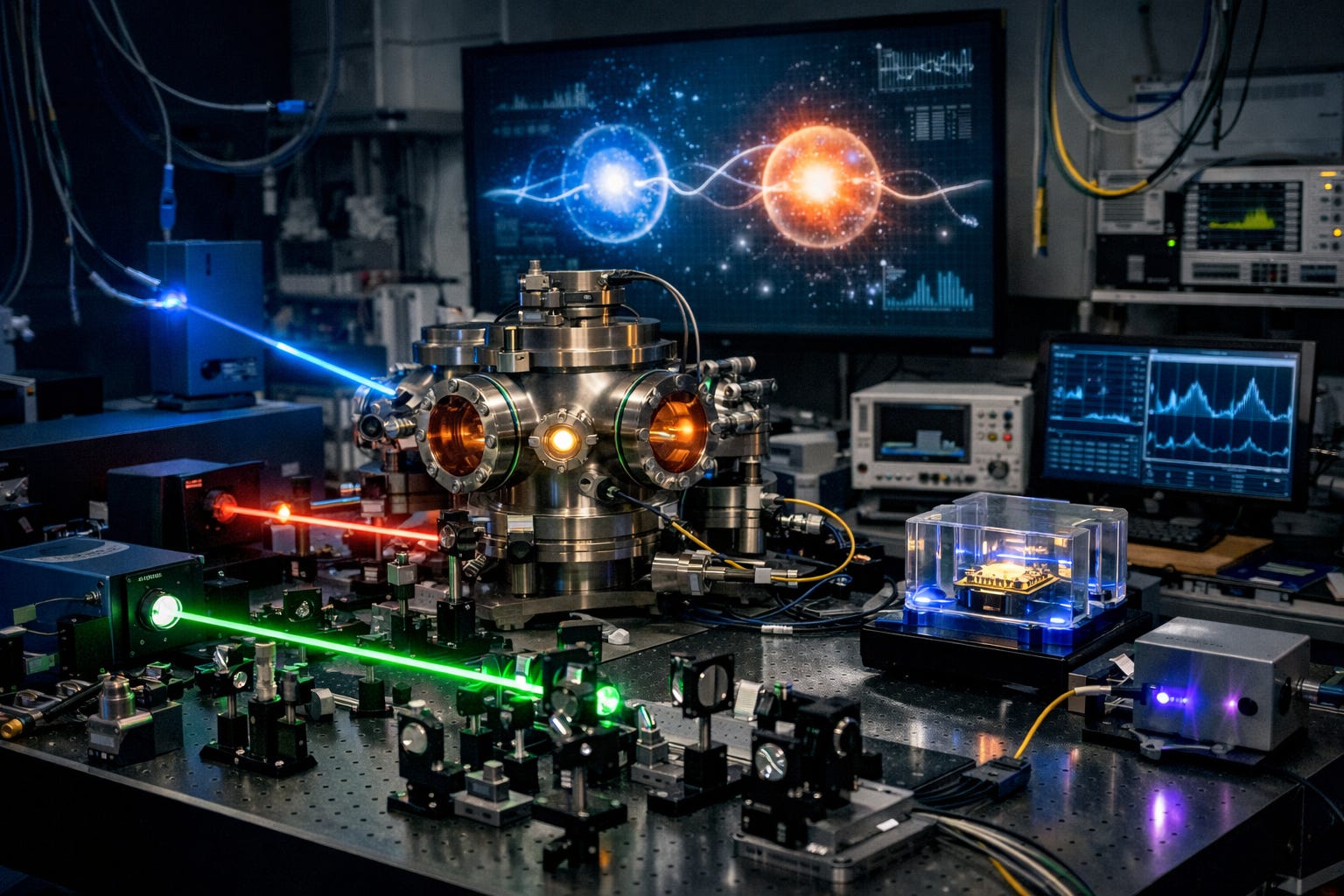
Updated: February 12, 2026
Several weeks ago, I attended SPIE Photonics West in San Francisco. During the event, I gave a general overview of the quantum market landscape on the dedicated business day. I visited the exhibit hall, and it was, well, overwhelming, with hundreds of companies showcasing their products for all the areas where photonics is used.
The quantum section was a bit fuzzy: several companies clearly belonged there, but others seemed only tangentially involved with quantum technologies per se. I decided to do some dedicated research on photonics once I got home to minimize any further personal photonic fuzziness.
Interested in photonic quantum computing? Photonics. (That was easy.)
Interested in trapped ions or neutral atoms? Photonics.
Quantum networking? Photonics.
Quantum communications? Photonics.
Quantum sensing? Photonics plays a huge part.
Europe just kicked off the Photonics for Quantum (P4Q) program, with 29 partners and €50 million in funding. The IEEE provides a comprehensive list of major regional photonics centers worldwide.
What follows, for paid subscribers of this Substack, are 15 kinds of photonics components and the 43 companies that produce them. The “Micro-” in the title of this post indicates that while this collection is non-trivial, it is but a starting point for further market research and expanded reports.
I’ve tried to limit myself to photonics for quantum applications, so I am not including areas such as surgery, biology, retail, general telecommunications, manufacturing, or photovoltaics. Some quantum photonics components may be applicable to those other areas.
Please let me know on LinkedIn if I have missed any; it is almost certainly a nonempty set.